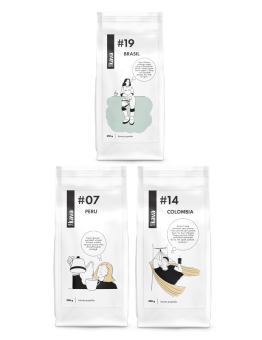













Recommends
Tikrai verta dėmesio kava

Popular searches:
Sign in to access your account
Why register?
Cart
Your cart is empty



SKU: 89062500
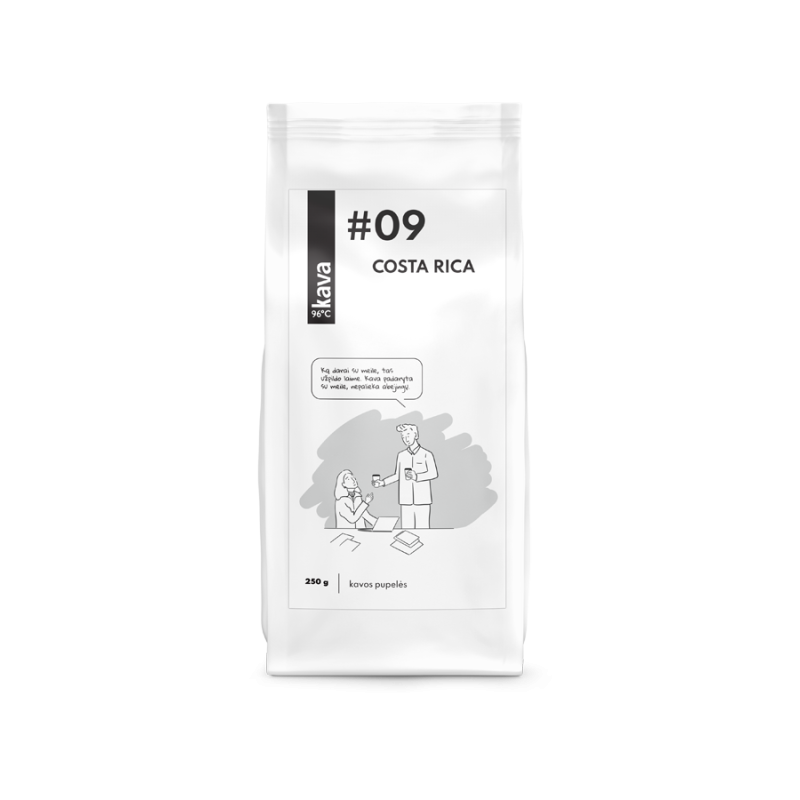
A rich bouquet with sweetness, pleasant floral tones and citrus acidity – this coffee will not leave any coffee lover indifferent.
Roasted in Lithuania.


Grinding recommendations:
1. Extra-fine grind: for Turkish coffee in a cezve (ibrik).
2. Fine grind: for espresso.
3. Medium grind: for AeroPress and pour-over/filter coffee.
4. Coarse grind: for French press.
We recommend these coffee beans for:



Grind the beans to suit the coffee maker you use:
 extra-fine grind: for Turkish coffee in a cezve (ibrik);
 fine grind: for espresso;
 medium grind: for AeroPress, pour-over/filter coffee and brewing in the cup;
 coarse grind: for French press.
Store in a cool, dry place.
| Brand | KAVA96°C |
|---|---|
| Reference | 89062500 |
| Coffee characteristics | Caffeinated |
| Coffee origin | Costa Rica |
| Bean variety | Arabica |
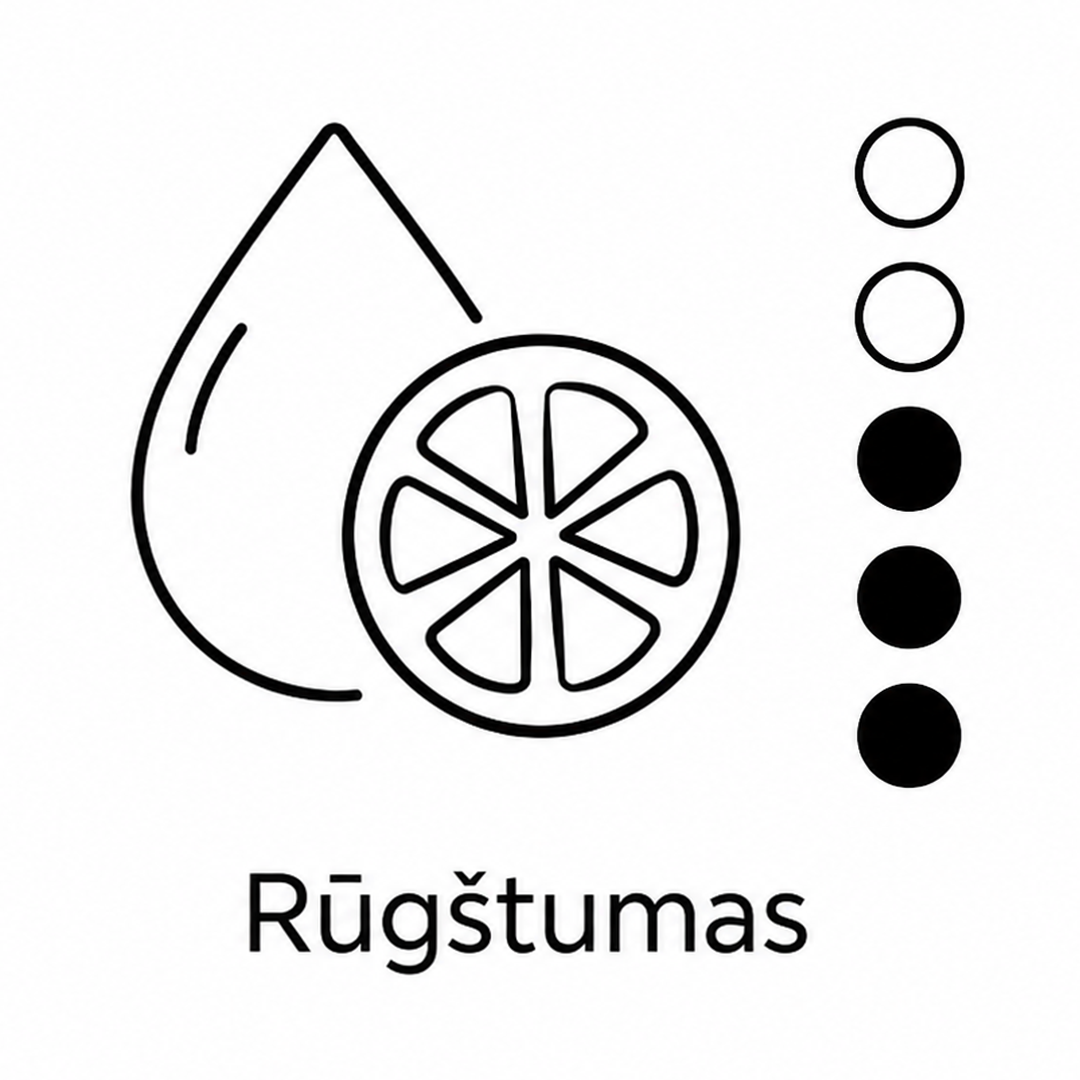
| Bitterness | Below medium |
| Acidity | Mild, medium |
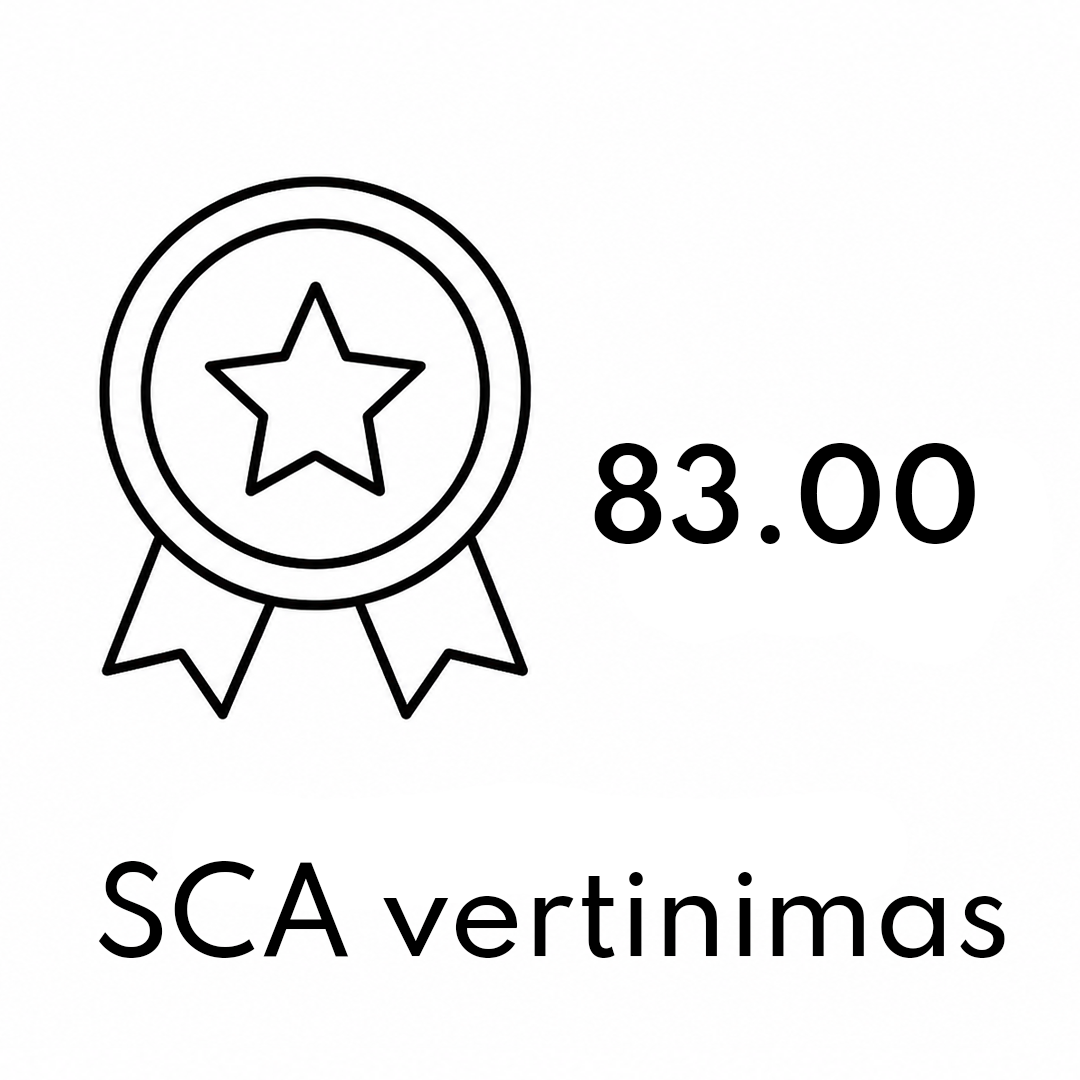
| SCA score | 83.00 |
| Processing method | Washed (wet) |
| Flavour notes | Cocoa, grapefruit |


Costa Rica coffee beans – grown at an altitude of 1,200–1,800 metres. The rich bouquet of these beans, with sweetness, pleasant floral tones and citrus acidity on the palate, will win over any coffee connoisseur.


Cocoa, grapefruit.
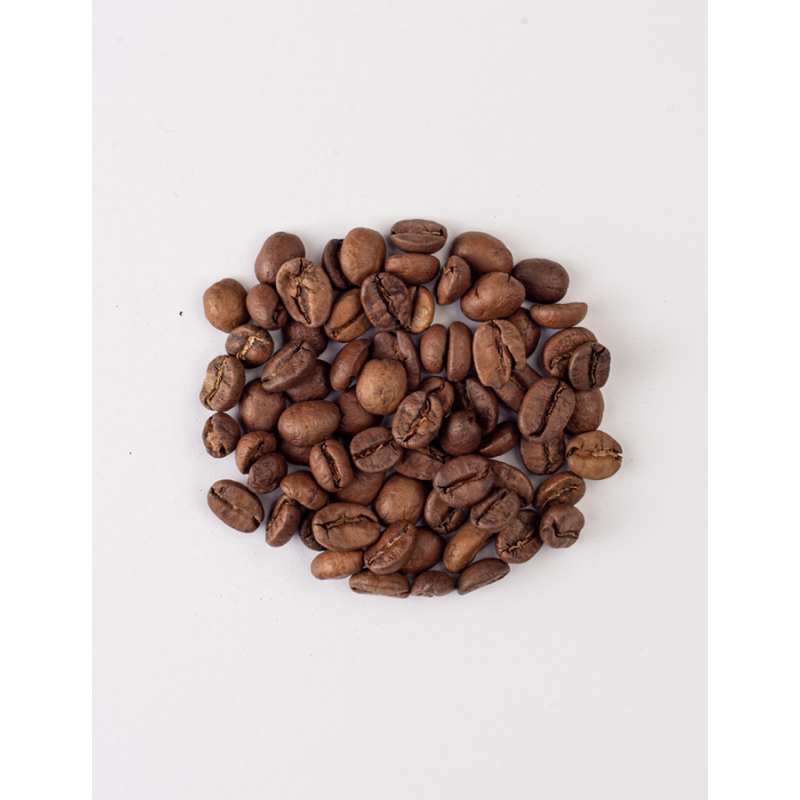
Roasted Costa Rica SHB 100% Arabica coffee beans
Wet processing helps preserve a clean taste, a delicate aroma and brighter flavour notes.
Costa Rica was the first country in Central America to grow coffee. This came about thanks to Europeans, who brought Arabica to the country in 1779. In 1843 Costa Rica began exporting coffee directly to Europe, and later to the USA. The first coffee trees in Costa Rica were planted near the capital, San José. As in the country's other coffee-growing regions, the soil here is volcanic, with plenty of sun and rain. Costa Rica grows only Arabica, which here contains more caffeine than usual. Costa Rican coffee is traditionally the strongest, and the local Arabica is rightly considered the best in the world, suiting the tastes of coffee connoisseurs.
In the past, Costa Rica used the wet processing method. As a result, the soil became polluted with acidic water, which was simply poured away after fermentation. Farmers then switched to a semi-washed method, in which the pulp is removed mechanically using special equipment.
Costa Rican coffee is classified by growing altitude. Altitude affects the quality of the flavour and the density of the bean – the denser the bean, the better. Costa Rican coffee is therefore assigned one of four grades: SHB (Strictly Hard Beans) – the highest grade, coffee grown above 1,400 metres; SHG (Strictly Hard Grown) – coffee grown above 1,200 metres; GHB (Good Hard Beans) – coffee grown at 1,000–1,800 metres; MHB (Medium Hard Beans) – coffee grown at 500–900 metres. Costa Rica's climate and soil are ideal for growing truly high-quality coffee. It is no coincidence that the country produces so much specialty coffee.
Costa Rica SHB – grown at an altitude of 1,200–1,800 metres. The rich bouquet of these beans, with sweetness, pleasant floral tones and citrus acidity on the palate, will win over any coffee connoisseur. The aroma also has chocolate notes. The beans are dominated by fruity aromas with hints of citrus. On the palate you will find a wine-like acidity with hints of orange, mandarin and grapefruit. The aftertaste brings touches of caramel and the subtle bitterness of dark chocolate.
Tikrai verta dėmesio kava