















You bought great beans and set the grind, but your coffee still tastes somehow off – bitter, lukewarm or just flat? Often the cause lies not in the beans, but in the machine itself.
Every day, water, coffee and milk flow through your coffee machine. Each of them leaves its mark. If the machine isn't maintained, this residue builds up and gradually changes the taste, temperature and flow of your coffee.
In short: a coffee machine needs not only to be descaled, but also regularly cleaned of coffee oils and milk residue. Each of these needs a different product.
01. Why does a clean machine make better coffee?
Limescale
Mineral deposits from water build up in the machine's pipes and heater. They can lower the water temperature and slow down the flow.
Coffee oils
The oils in coffee beans stay inside the machine and turn rancid over time. Every new cup then picks up off, bitter notes.
Milk residue
Milk that dries in the milk system is hard to remove. It can clog the tubes and spoil the milk froth.
In other words, even the best beans won't shine if their taste is masked by old coffee oils or limescale.
02. How do you know it's time to clean your machine?
The coffee is cooler than before. Limescale in the heater can prevent the water from reaching the right temperature.
The coffee flows more slowly or unevenly. This may mean that the pipes or nozzles are partly clogged.
The taste is bitter, “stale” or sour. A common sign of rancid coffee oils.
Poorer milk froth. Residue may have built up in the milk system.
The descaling indicator is on. Automatic machines tell you themselves when it's time to descale – this signal shouldn't be ignored.
03. Care calendar: what to do and when?
The exact intervals depend on the machine model and how often you use it, so always check the manual. For most automatic machines, however, the following plan is a good guide:
| When? | What to do? |
|---|---|
| Daily | Use fresh water and empty the drip tray and grounds container. Rinse the milk system after every milk-based drink. |
| Weekly | Remove the brew unit (if removable) and rinse it with lukewarm water, and wash the water tank. Take apart and wash the milk system parts. |
| Monthly | Remove coffee oils with cleaning tablets and clean the milk system with a special cleaner, if your machine's manual provides for this. |
| When prompted | Descale the machine when the indicator lights up or as stated in the manual. How often depends on water hardness and the number of cups you make. |
The plan is based on recommendations from coffee machine manufacturers (Philips, De'Longhi). Your machine's manual always comes first.
04. Descaling: what you need to know

Set the water hardness
On most automatic machines you can set the water hardness. It determines when the machine will ask for descaling. The harder the water, the faster limescale builds up. A water filter, if your machine supports one, means you need to descale less often.
Don't use vinegar
Coffee machine manufacturers such as De'Longhi and Bosch advise against descaling with vinegar. It can damage parts of the machine and leave a strong smell and sour aftertaste in your coffee. Choose a descaler made specifically for coffee machines.
Check the manual and warranty terms
Some manufacturers recommend using only their own brand of descaler. Before choosing a universal product, check your machine's manual – especially if the machine is still under warranty.
05. Care products from Onelife.lt
The Onelife.lt range includes four URNEX products for different types of build-up: limescale, coffee oils and milk residue.
01 / For limescale – regular use
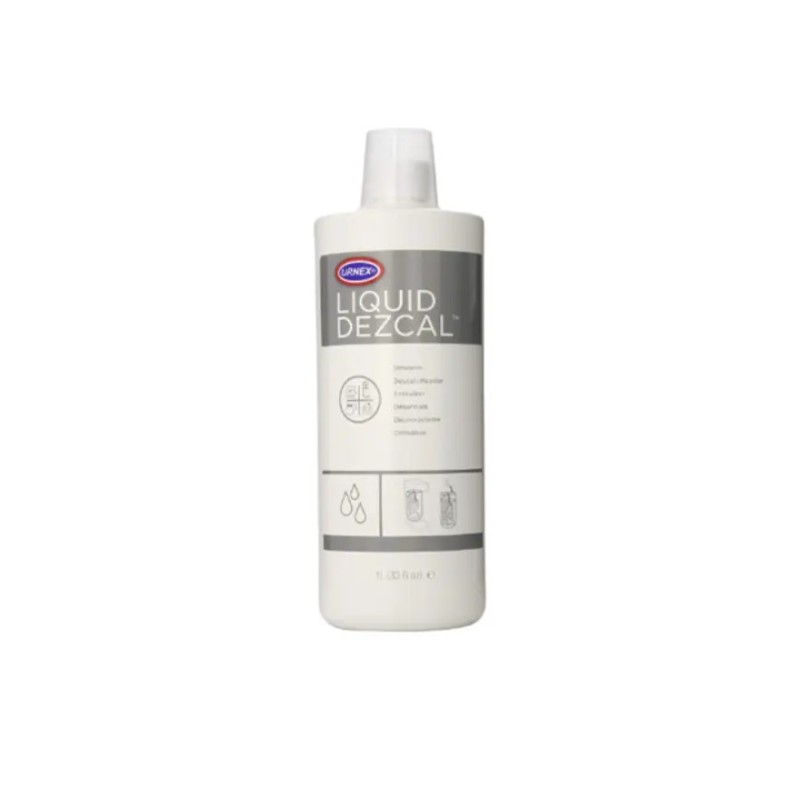
URNEX Liquid Dezcal descaling liquid, 1000 ml
Descaling | 20 cycles per bottle
A liquid for removing limescale and mineral deposits. One cycle requires 50 ml of liquid in 500 ml of hot water (ratio 1:10). The large bottle is convenient if you descale often.
Recommended for: espresso and automatic coffee machines, especially with hard water.
02 / For limescale – single use
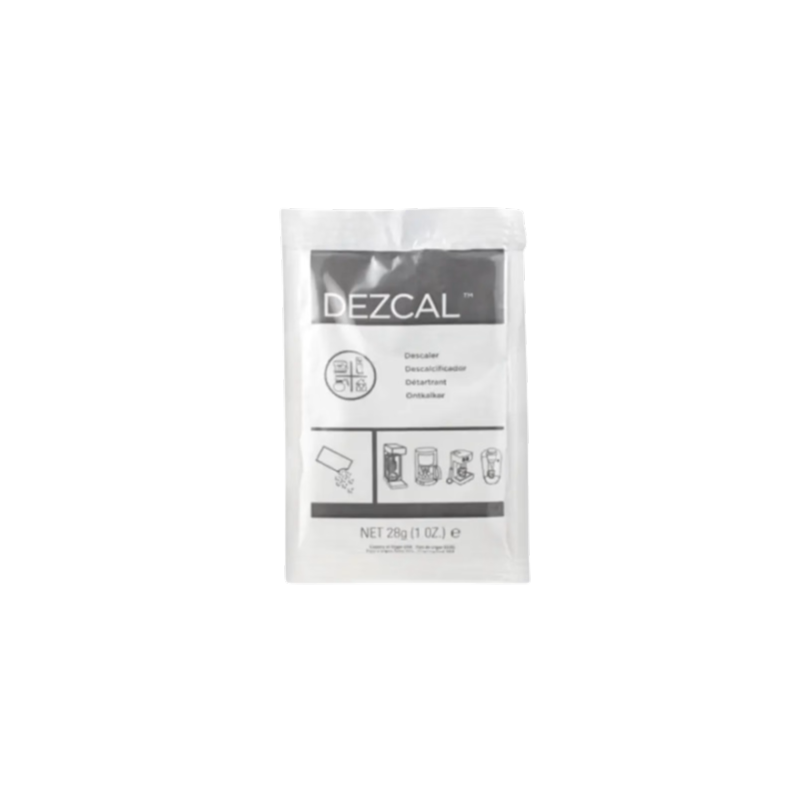
URNEX Dezcal descaling powder, 28 g
Descaling | Espresso, automatic and filter coffee machines, kettles
A powder that removes limescale from coffee machines. Also suitable for kettles and other surfaces prone to limescale. Use according to the instructions on the package.
Recommended for: trying it for the first time or occasional descaling.
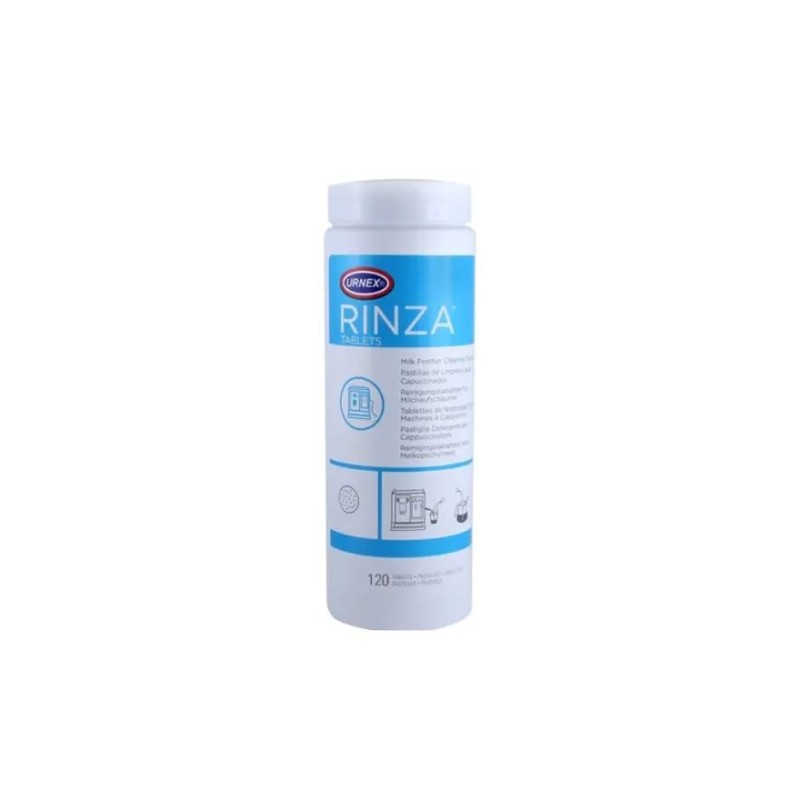
03 / For the milk system
URNEX Rinza milk system cleaning tablets (120 cleans)
Milk proteins, fats and calcium deposits | Automatic and professional machines
Tablets for cleaning the milk system and other parts that come into contact with milk. Also suitable for the steam wand and milk jugs. The manufacturer recommends daily use, but at least once a week.
How to use: Dissolve 1 tablet in 500 ml of cold water, place the milk tube in the solution and start the milk system cleaning programme. Then rinse with clean water.
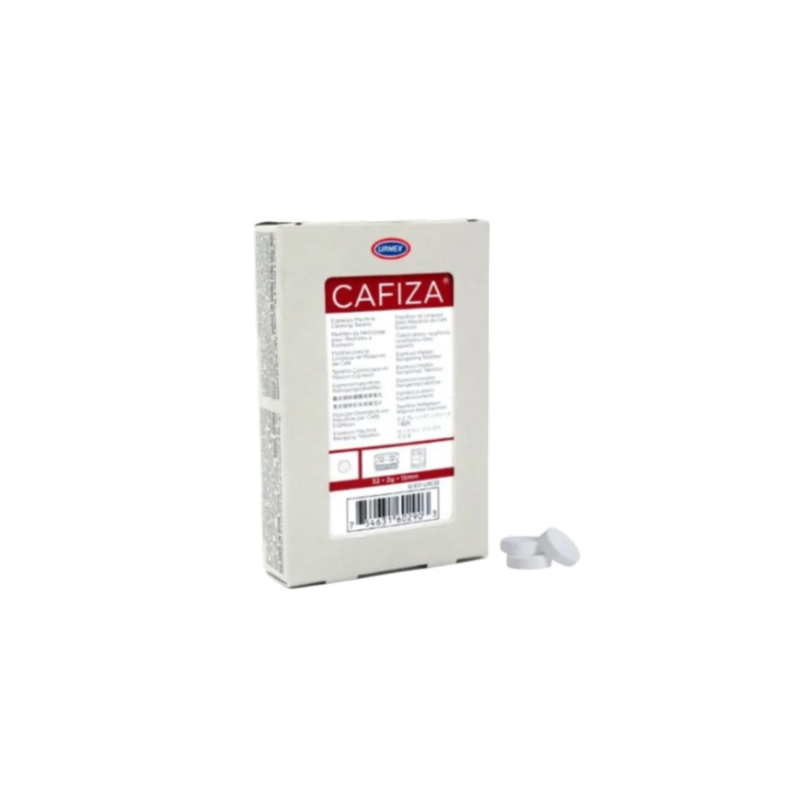
04 / For coffee oils
URNEX Cafiza coffee machine cleaning tablets, 8 pcs
Coffee residue and oils | Espresso machines with a portafilter
Tablets that remove coffee residue and oils from the machine's system. Cleaning is done with a blind filter (without holes) inserted into the portafilter:
- Place 1 tablet in the blind filter and insert the portafilter.
- Repeat the cycle 5 times: 10 s of water flow and a 10 s pause.
- Remove the portafilter, rinse it and repeat the cycle without a tablet.
- Make one cup of espresso and pour it away.
Purpose and directions for use are based on Onelife.lt product descriptions. Before using any product, always check your machine's manual too.
06. Which products does your machine need?
| Machine | Limescale | Coffee oils | Milk system |
|---|---|---|---|
| Automatic with milk system | Liquid Dezcal or Dezcal powder* | As per the machine's manual | Rinza |
| Espresso with a portafilter | Liquid Dezcal or Dezcal powder | Cafiza | Rinza (steam wand, jugs) |
| Filter coffee machine, kettle | Dezcal powder | – | – |
*If the machine manufacturer allows universal descalers.
07. Five most common care mistakes

1. Ignoring the descaling signal for weeks
The longer limescale builds up, the harder it is to remove. Descale as soon as the machine asks.
2. Descaling with vinegar
Vinegar can damage the machine and leave a smell. Use a product made for coffee machines.
3. Cleaning only for limescale
A descaler doesn't remove coffee oils or milk residue. These need separate cleaning products.
4. Not rinsing the milk system after use
Dried milk is hard to remove. Rinse the milk system right after making a milk-based drink.
5. Using very oily beans
Very dark roasted, oily or flavoured beans can build up in the grinder. Medium roast beans usually suit automatic machines better.
08. Frequently asked questions
How often should I descale my coffee machine?
It depends on water hardness and how much coffee you make. Automatic machines show you when it's time to descale, provided the water hardness is set correctly.
Are descaling and cleaning the same thing?
No. Descaling removes mineral limescale deposits, while cleaning tablets remove coffee oils and residue. The milk system needs separate products.
Does a water filter help?
Yes. If your machine supports a water filter, it reduces limescale build-up, so you need to descale less often. Replace the filter on time.
Can I use Cafiza tablets in an automatic machine?
Cafiza's directions are designed for machines with a portafilter and a blind filter. To clean the brew unit of an automatic machine, use the products specified in the manufacturer's manual.
A clean machine – a better cup every time
A few minutes of care each week and timely descaling help your coffee keep its true taste and your machine last longer.
Choose a descaler for limescale, cleaning tablets for coffee oils and a dedicated milk system cleaner for the milk system.
Good beans deserve a clean machine.
DISCOVER CARE PRODUCTS AT ONELIFE.LTSources used
- De'Longhi – How to Descale a Coffee Machine. The effect of limescale and how often to descale.
- De'Longhi – Bean to Cup Coffee Makers: maintenance tips. Daily care and why not to use vinegar.
- Bosch – Descaling with vinegar. Why descaling with vinegar is not recommended.
- Philips – Cleaning and maintenance. How often to care for the brew unit and milk system.
- La Marzocco Home – A Clean Espresso Machine Makes Better Coffee. How coffee oils affect taste.
- Onelife.lt – Coffee machine care products. Purpose and use of URNEX products.
- Illustrative photos – Unsplash (Unsplash License).