












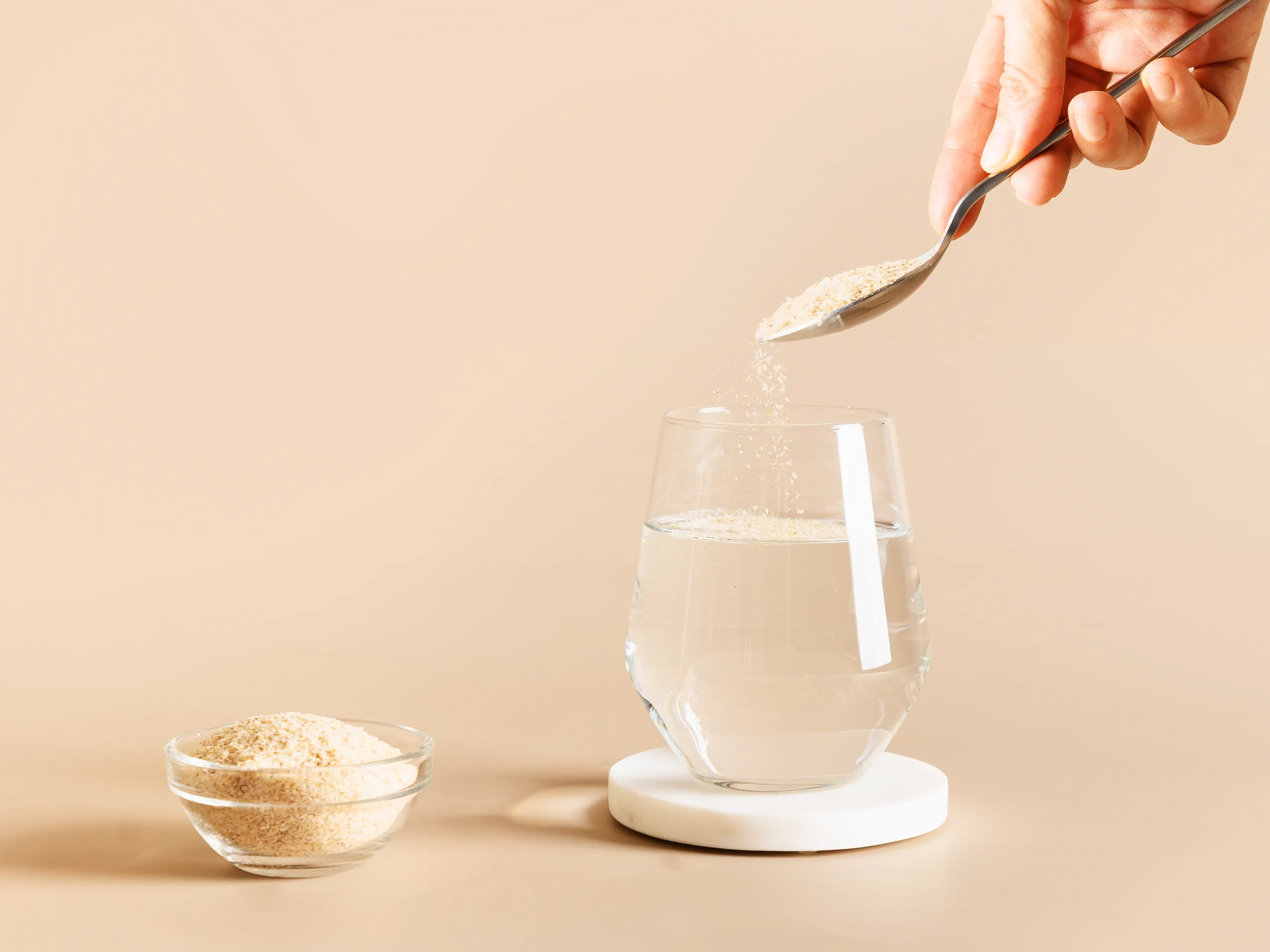
Composition, taste, texture and use – a clear guide to choosing.
Today there is a wide choice of fibre powders: from 100% psyllium husk to various plant fibre blends with seeds, fruit and other ingredients. At first glance they may seem to serve the same purpose, but they differ not only in composition, but also in taste, texture and preparation.
Some fibres thicken quickly when mixed with water, while others disperse more easily in liquid. Some are almost tasteless, while the taste of other blends is shaped by fruit, seeds or plant powders.
So how do you choose a fibre powder that is easy to include in your daily diet? Let's compare the main differences and specific products from the Onelife.lt range.
01. What is psyllium husk?
Psyllium ( Plantago ovata ) seed husk, often simply called psyllium , is a plant-based source of dietary fibre.
Its main property is the ability to absorb water and form a gel-like mass. This is exactly what sets psyllium husk apart from many other types of fibre.
Psyllium husk is rich in soluble fibre, which may help maintain normal bowel function. Its effect on blood cholesterol levels is also studied in scientific literature.
What makes it stand out in a daily diet?
- Simple composition – you can choose a single-ingredient product.
- Neutral, mildly plant-like taste.
- Ability to thicken water or other liquids quickly.
- High concentration of dietary fibre.
For example, Švenčionių vaistažolės psyllium husk, 100 g consists of 100% husk. It contains 86 g of dietary fibre per 100 g of product.
02. How are fibre blends different?
Fibre blends are products that combine several sources of fibre and sometimes additional ingredients.
Depending on the composition, they may contain psyllium husk, flaxseed, acacia fibre, inulin, fruit powders, plant extracts or bacterial cultures.
Different types of fibre have different physical properties. For example, psyllium husk forms a viscous gel, while inulin dissolves in water without thickening it as much. In addition, different fibres are fermented differently in the gut.
This means that two fibre blends with different compositions may differ even when their total fibre content is similar.
03. Taste and texture: what to know before you buy
Psyllium husk
When mixed with water, it swells and thickens fairly quickly. The taste is neutral and mildly plant-like, and the texture may resemble a runny jelly.
Fibre blends
The texture depends on the composition – it may be thick, grainy or with noticeable seed particles. Fruit and plant ingredients can give a distinctive taste.
Typical viscosity of psyllium husk
For blends with seeds and powders
For example, fibre blends with flaxseed may contain small noticeable particles, while blackcurrant juice powder may add fruity notes. However, in blends where psyllium husk makes up a large share, its swelling property still dominates.
If a neutral taste matters most to you, start with single-ingredient husk. If you prefer a more varied composition, choose a blend, but check its preparation recommendations before you buy.
04. Psyllium husk or blends: comparing Onelife.lt products
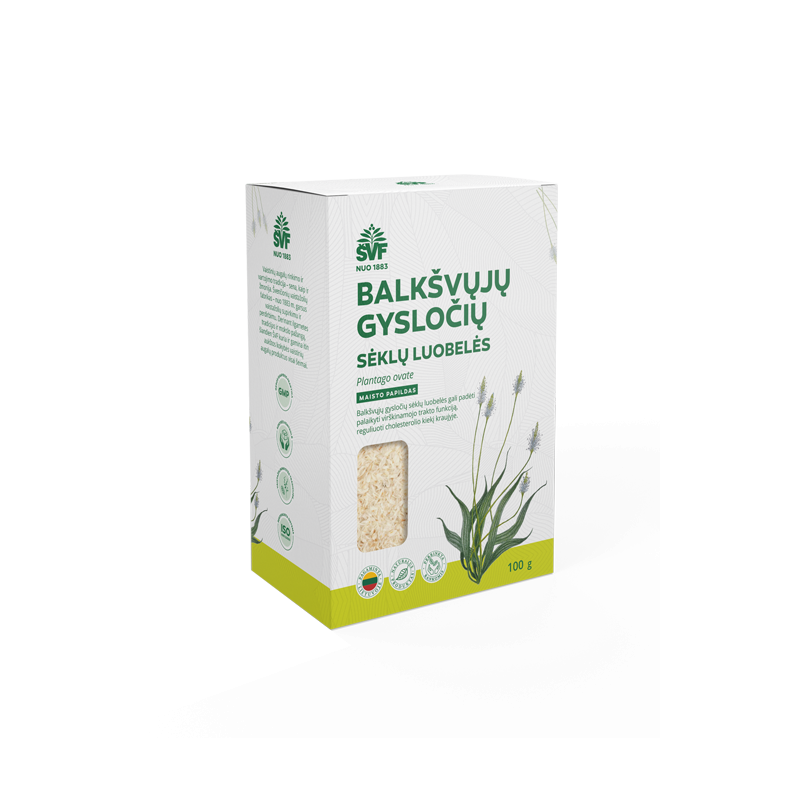
Psyllium husk, 100 g
100% psyllium huskA single-ingredient product containing 86% dietary fibre. Neutral taste and a swelling, gel-like texture.
Who is it for? Those looking for a simple composition without additional plant ingredients.
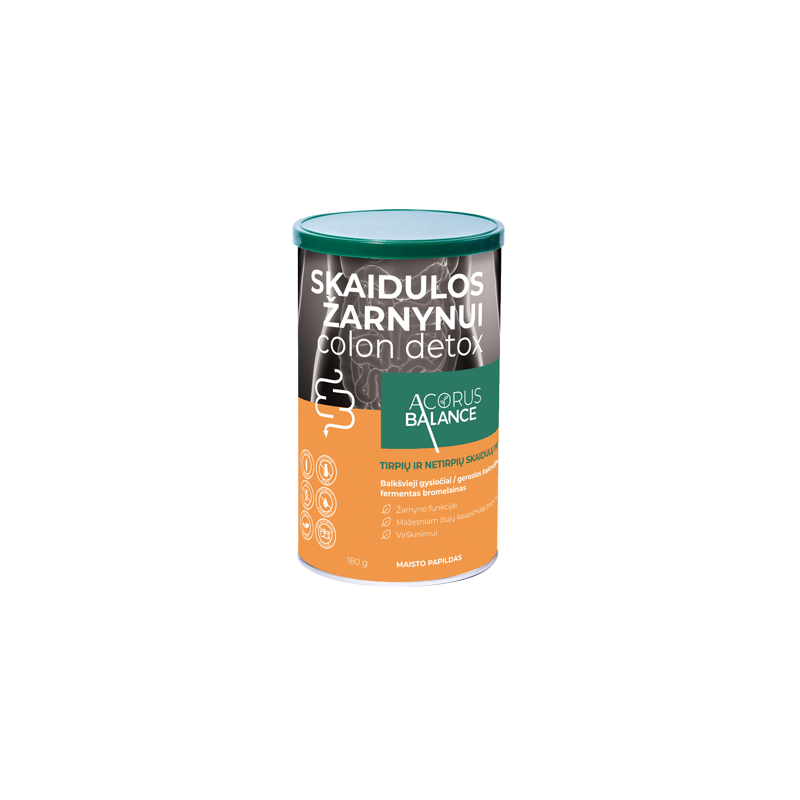
Fiber Colon Detox, 180 g
Blend of several plant ingredientsPsyllium husk, flax and hemp seeds, chicory, caraway, fennel and other plants. It also contains Bacillus coagulans (LactoSpore®) bacterial cultures. 69% dietary fibre.
Who is it for? Those who want a more varied plant-based composition with seeds and additional ingredients.
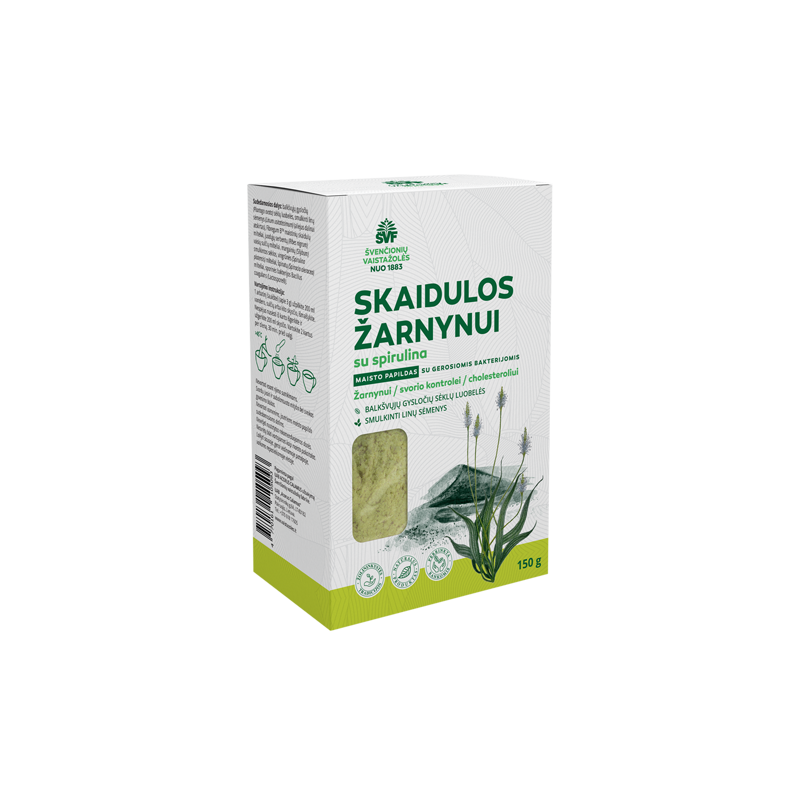
Fibre for the gut with spirulina, 150 g
Psyllium husk, seeds, fruit and plant powdersContains 60% psyllium husk, flaxseed, acacia fibre, blackcurrant juice powder, spirulina, spinach and other ingredients. 69% dietary fibre.
Who is it for? Those who enjoy combinations of various plant ingredients and don't mind a distinctive plant-like taste.
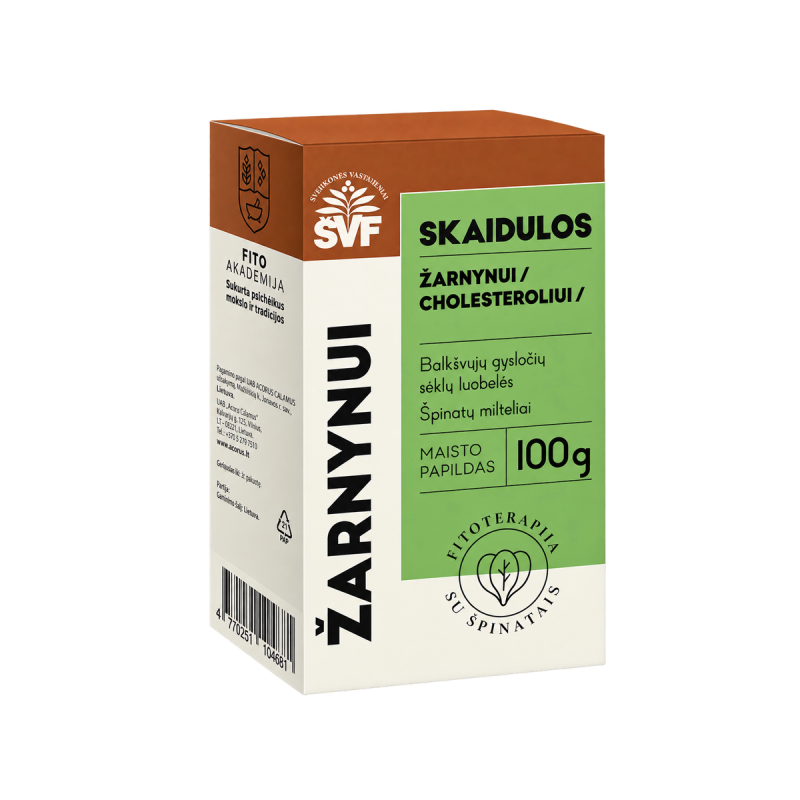
Fibre for the gut with spinach, 100 g
70% psyllium husk, 30% spinachA simple two-ingredient combination. The swelling texture typical of psyllium husk, complemented by spinach powder.
Who is it for? Those who want a simple plant-based blend without a long list of ingredients.
Compositions and fibre content are based on official product descriptions. Taste and texture descriptions are indicative and based on the properties of the ingredients, not on tasting tests of these products. Product images are loaded from Onelife.lt.
05. How to take fibre powders correctly
Preparing fibre powders is simple, but there is one rule to remember: when taking swelling fibres, drinking enough fluid is essential.
Psyllium husk absorbs water, so it should be taken according to the specific product's instructions, and the prepared drink should be consumed without delay.
For example, the recommendations for Onelife.lt products differ:
| Product | Amount for adults | Preparation |
|---|---|---|
| Psyllium husk | 6 g per serving | Mix with 200 ml of liquid and drink an additional 200 ml |
| Fiber Colon Detox | 4.5 g per serving | Mix with 200 ml of water |
| Fibre with spirulina | 3 g per serving | Mix with 200 ml of liquid and drink an additional 200 ml |
The manufacturer recommends drinking psyllium husk immediately after mixing. Fiber Colon Detox is taken twice a day, before meals.
When you start eating more fibre, it is worth increasing the amount gradually. A sudden large amount of fibre may cause bloating or other digestive discomfort.
06. Which fibre should you choose?
To make the decision easier, first think about which product features matter most to you.
| If you are looking for... | Choose... |
|---|---|
| A single ingredient and a neutral composition | 100% psyllium husk |
| A variety of plant ingredients and seeds | Fiber Colon Detox |
| A blend with spirulina and blackcurrant | Fibre with spirulina |
| A simple two-ingredient combination | Fibre with spinach |
| A less thickening texture | A blend dominated by less viscous fibres, such as inulin or certain acacia fibres |
Before choosing, compare not only the ingredient list but also the amount of dietary fibre in one recommended serving . A higher amount or more ingredients do not automatically make a product more suitable.
07. Frequently asked questions about fibre powders
No. Psyllium husk has a strong ability to swell and form a gel, but some other soluble fibres, such as inulin, do not thicken liquids as much.
Not necessarily. Pure husk stands out for its simple composition and high fibre concentration. Blends can offer a wider variety of fibres and additional ingredients. The better choice depends on individual needs.
Some products can be mixed with various liquids, but the amount of liquid specified by the manufacturer must be followed. This is especially important with strongly swelling psyllium husk.
No. Fruit, vegetables, legumes and wholegrain products provide not only fibre but also vitamins, minerals and other nutrients. Fibre powders can complement your diet, but should not replace a varied diet.
Choosing fibre starts with the composition
Psyllium husk and fibre blends can be a useful part of a fibre-enriched diet, but their properties are not the same.
Pure husk suits those looking for a simple composition and neutral taste. Fibre blends let you choose different combinations of plant ingredients, but their texture and taste may be more varied.
The most important thing is to choose a product whose composition, preparation and use fit your daily habits.
Sources used
- Personal experience of the Švenčionių vaistažolės team and results of studies carried out
- Onelife.lt – product compositions and usage recommendations.
- University College London Hospitals – Psyllium Husk and Fibre
- Evidence-Based Approach to Fiber Supplements
- AGA–ACG Clinical Practice Guideline